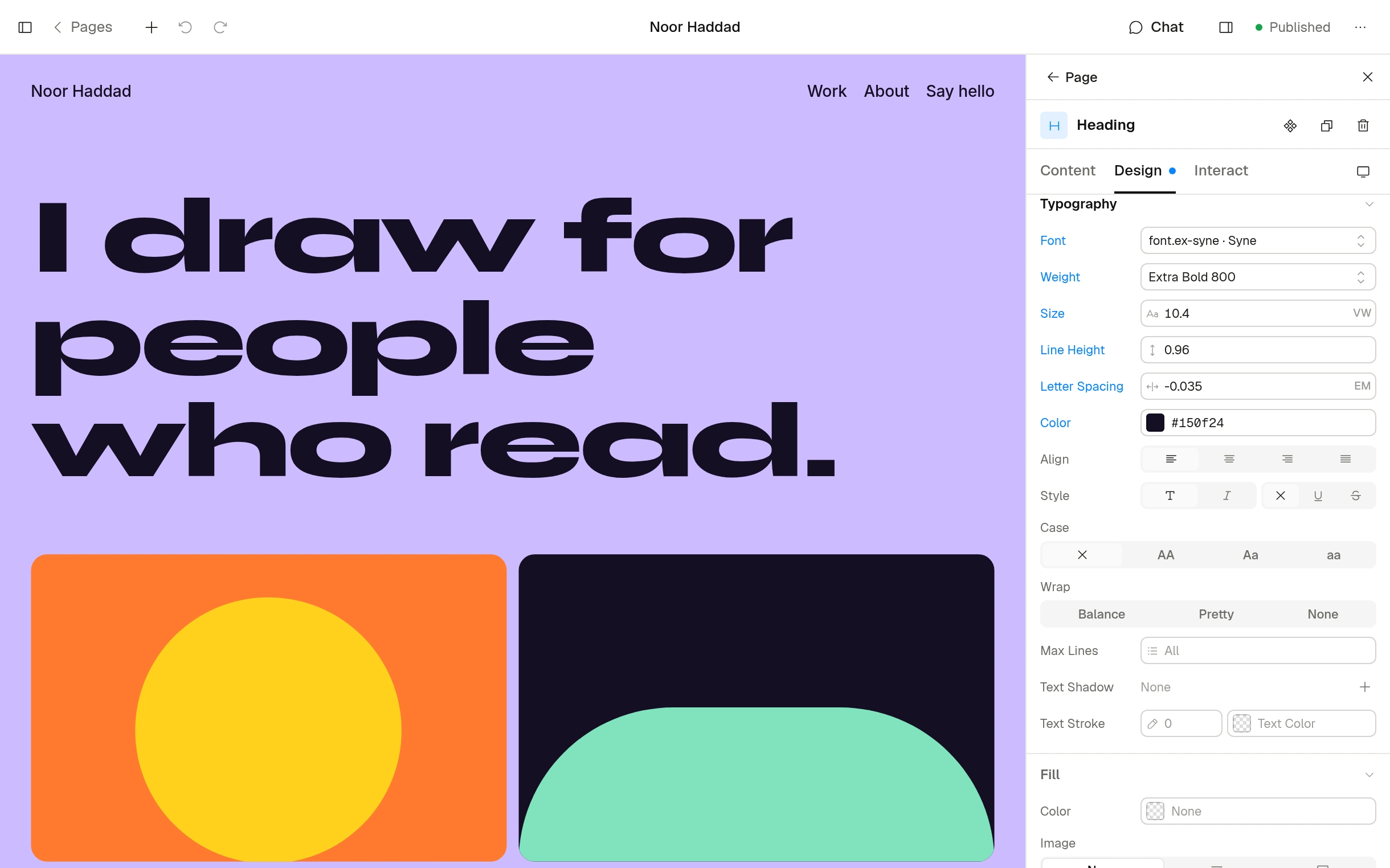
Designers
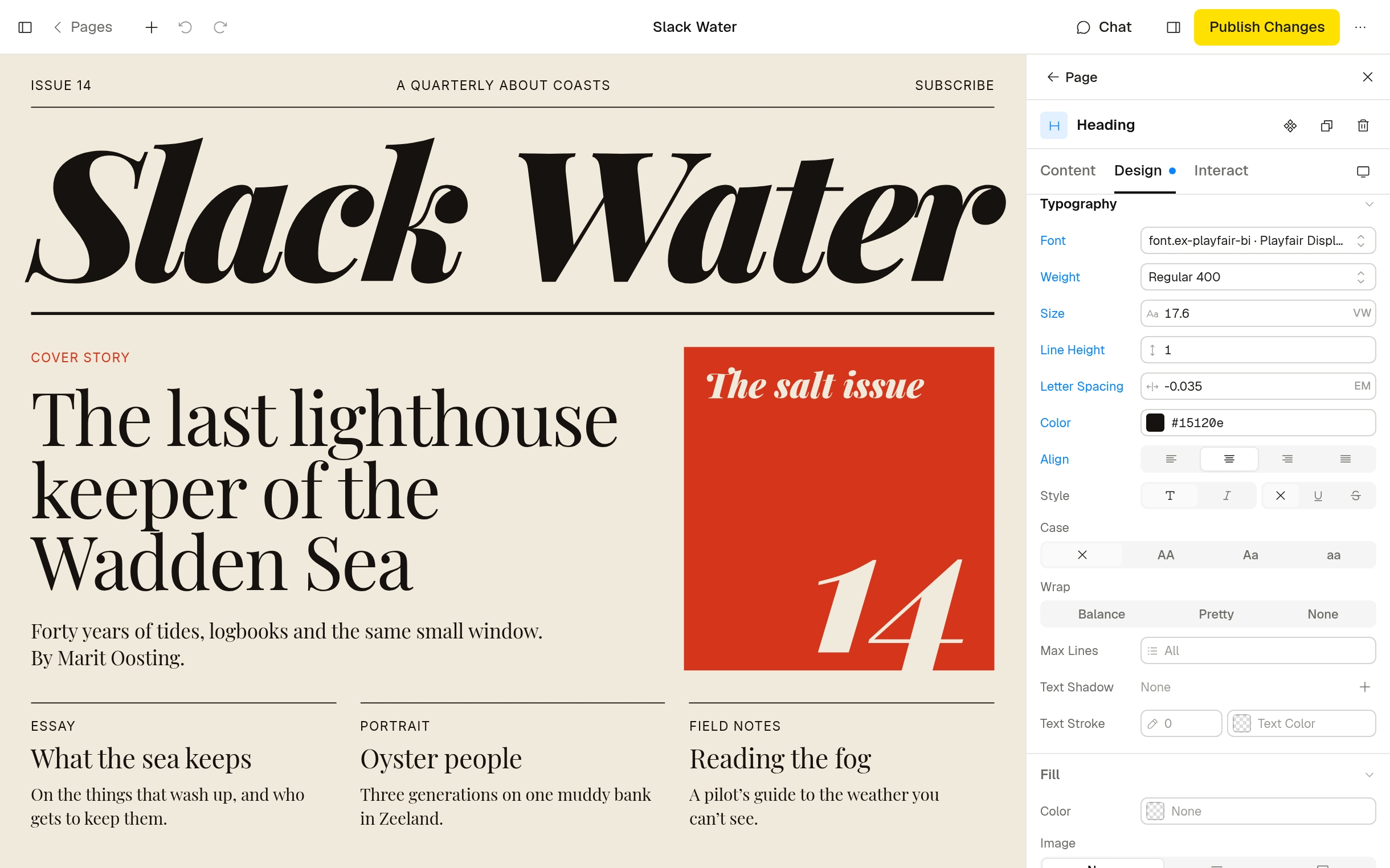
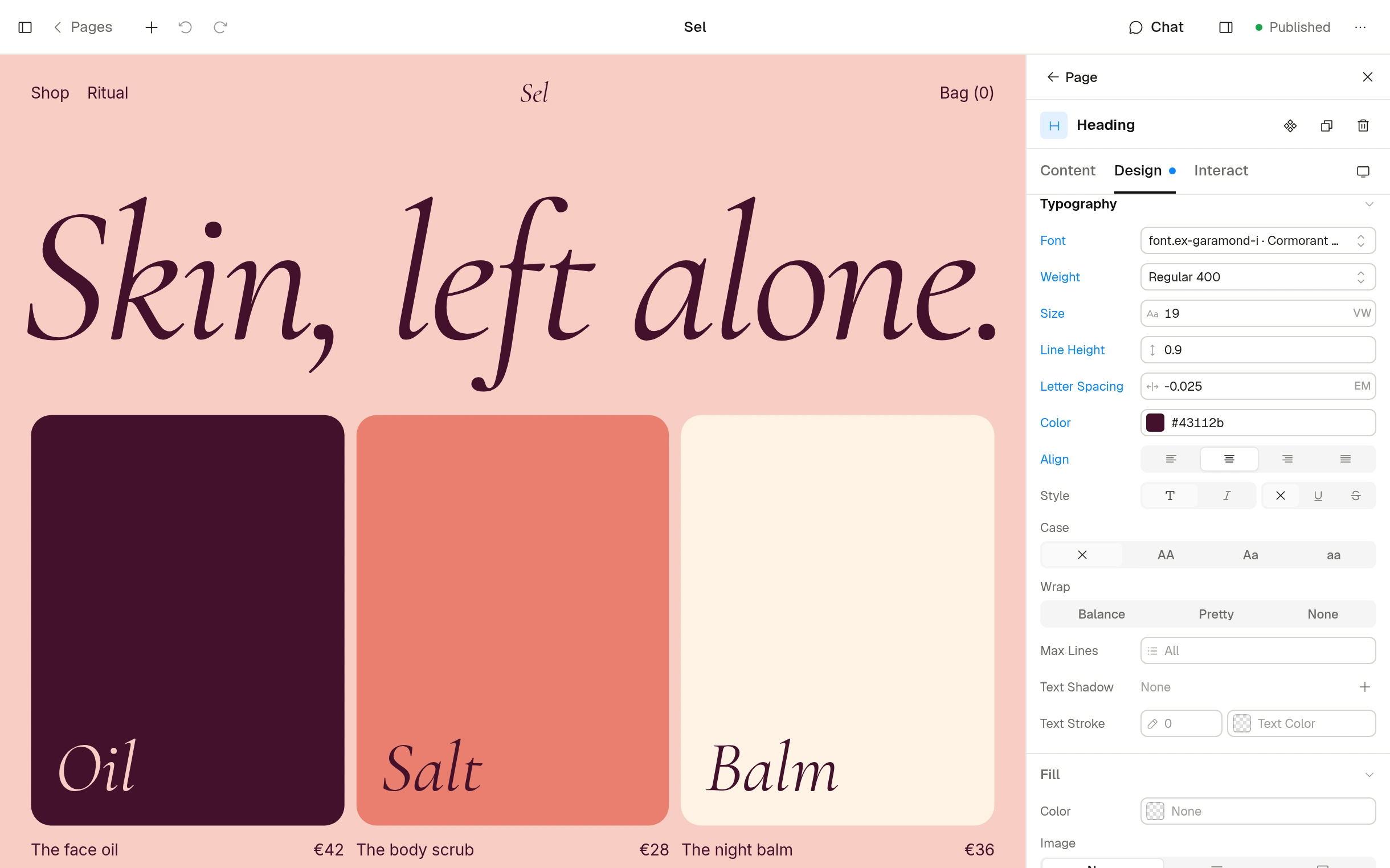
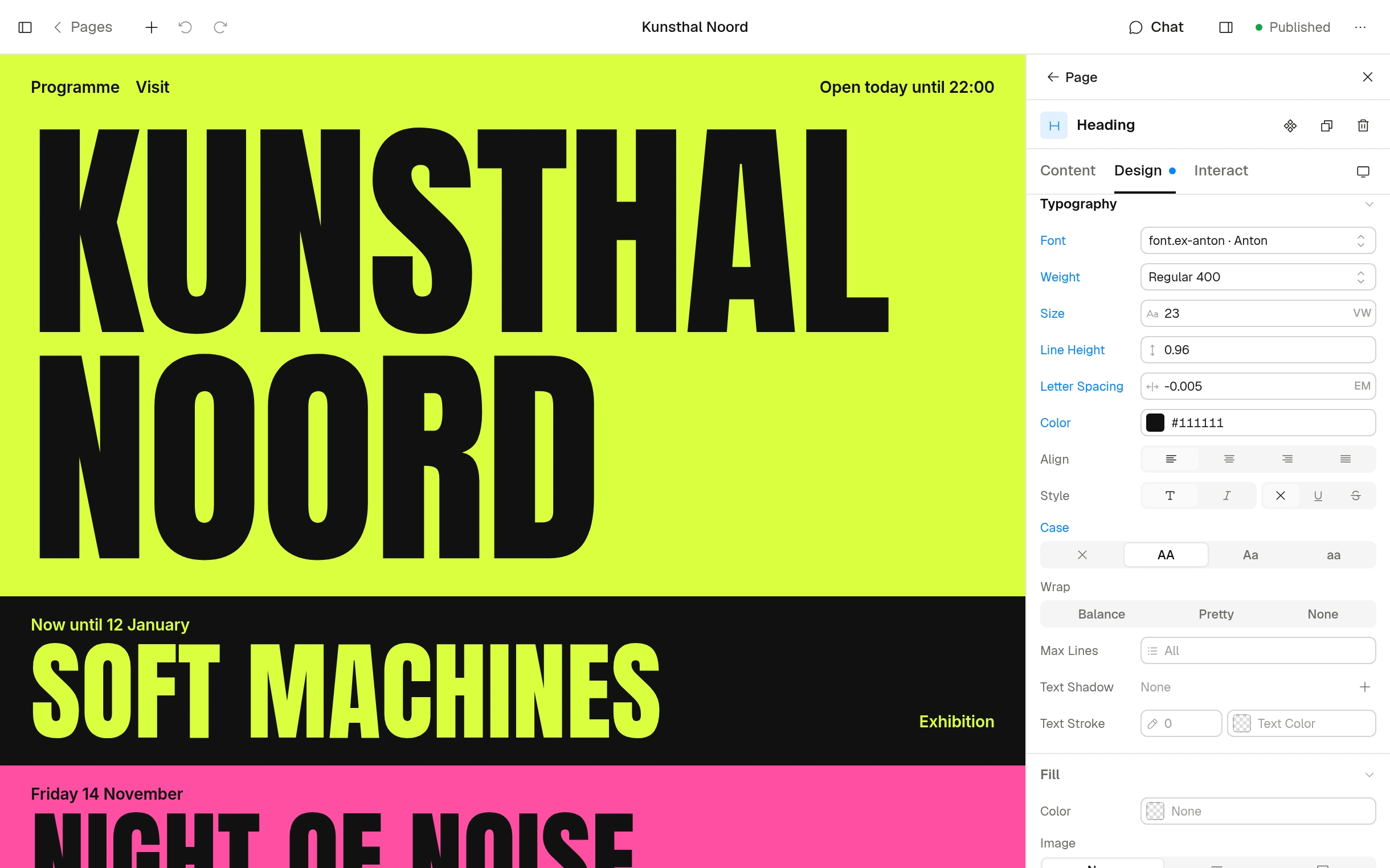
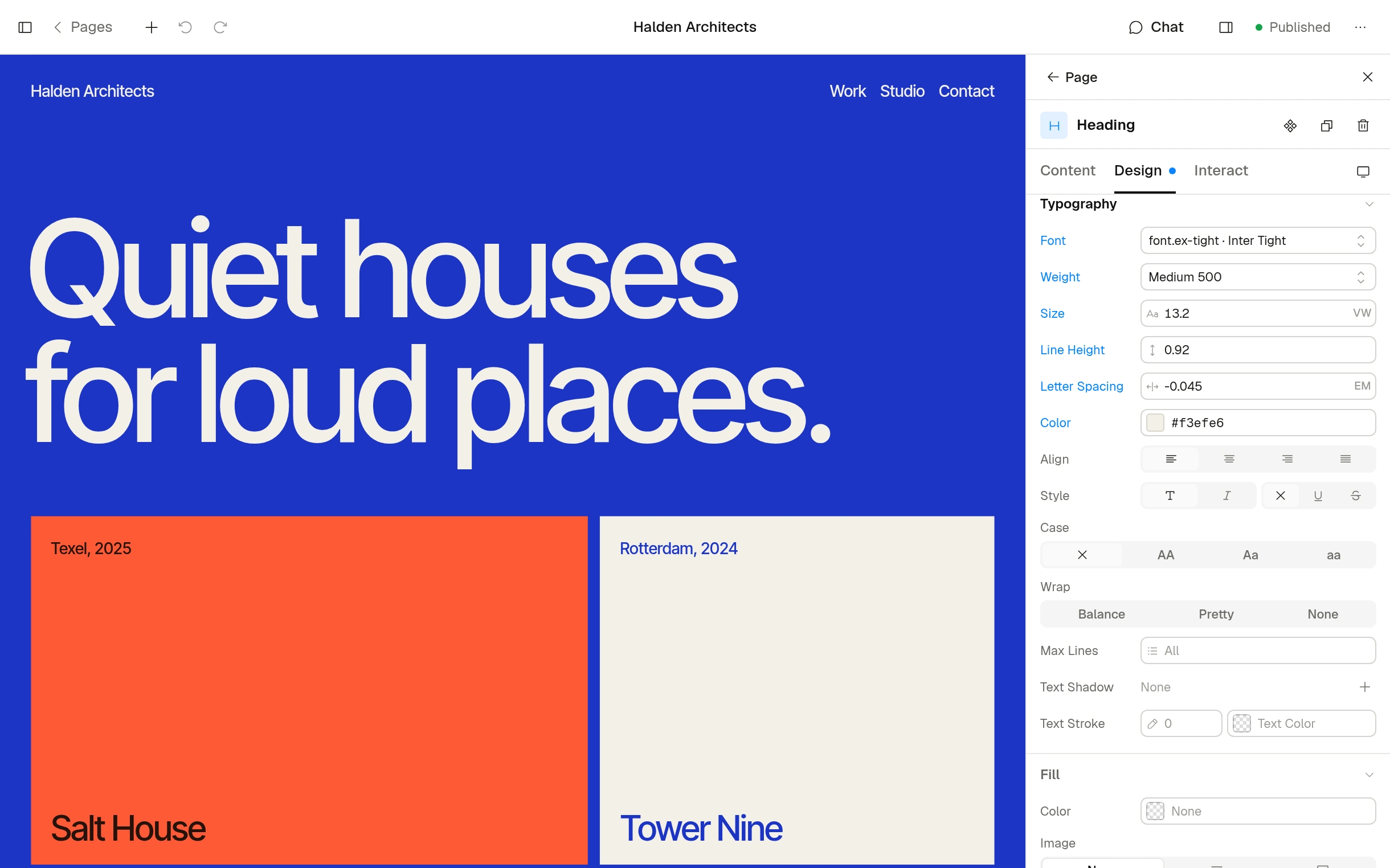
Type, colour and motion, on the real page.
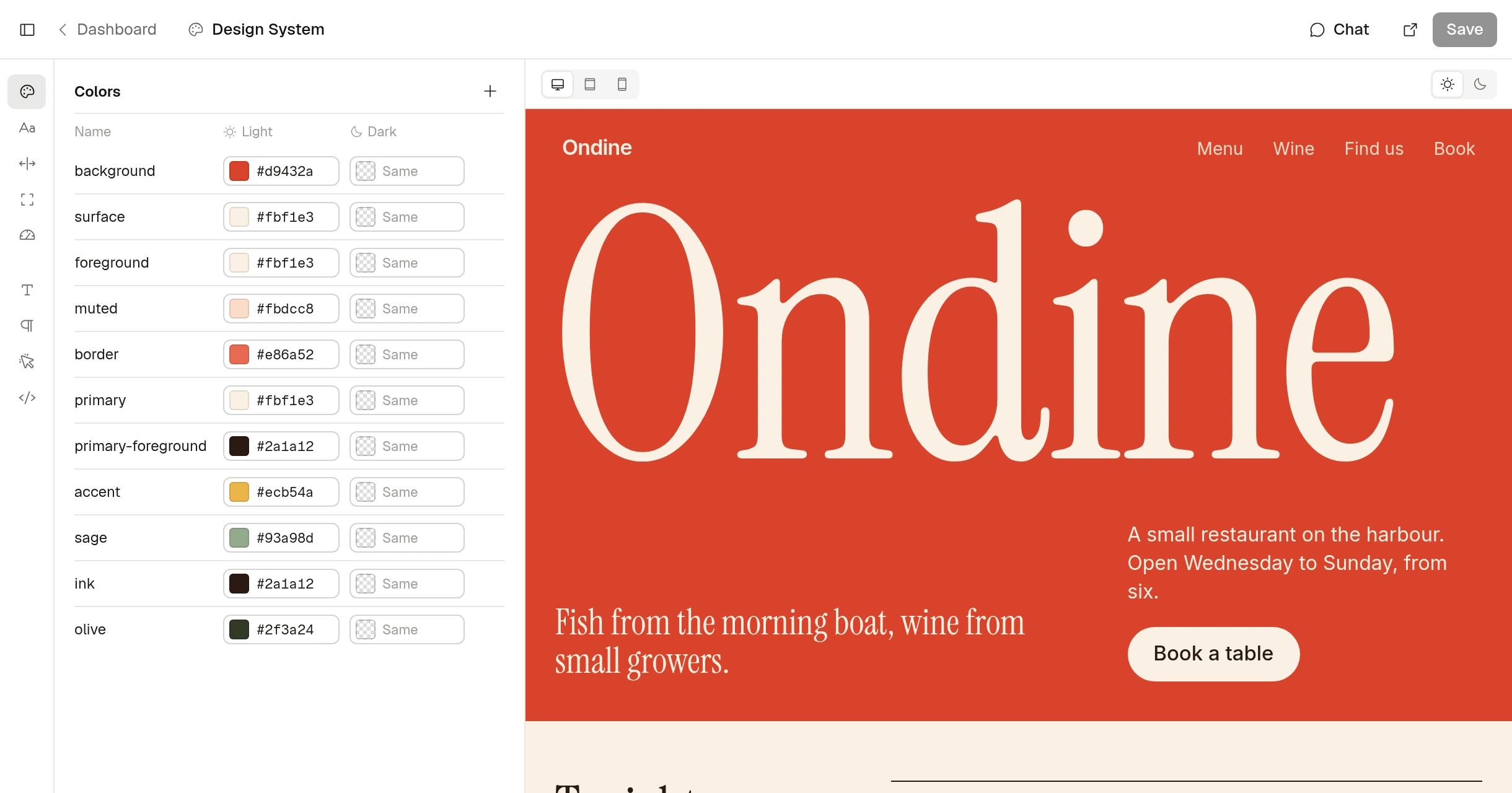
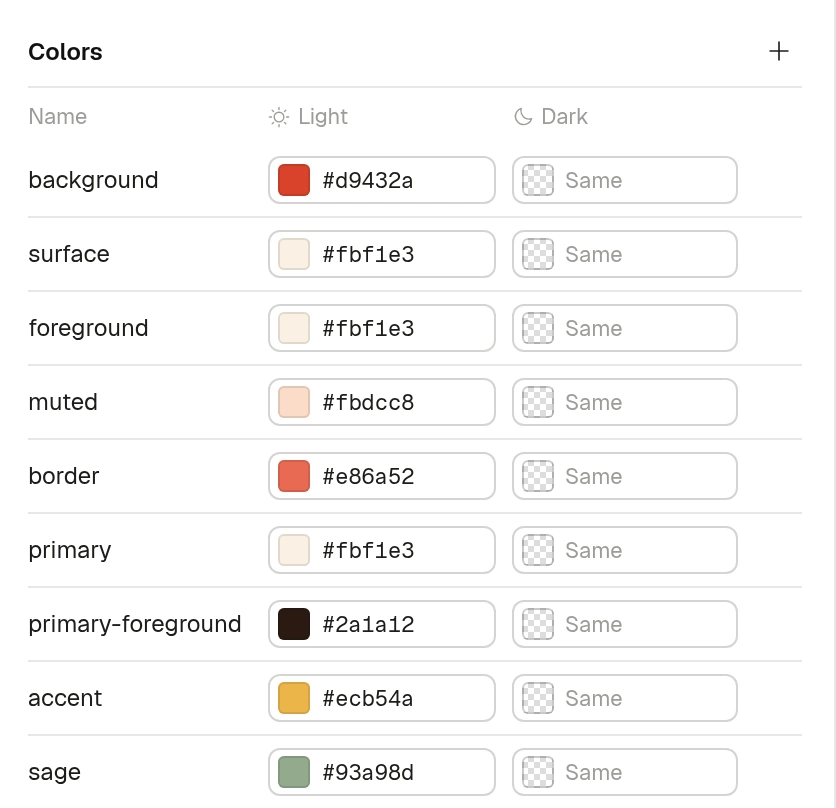
Every value is a token, so the next page starts on brand.
Developers
Templates, fields and roles, in git.
Design and content are plain files. Review them like code.
roles:
  client:
    label: Restaurant team
    description: Changes dishes, prices and photos.
    permissions:
      - admin.access
      - entries.dishes.view
      - entries.dishes.edit
      - entries.dishes.publish
      - media.view
      - media.upload
Project leads
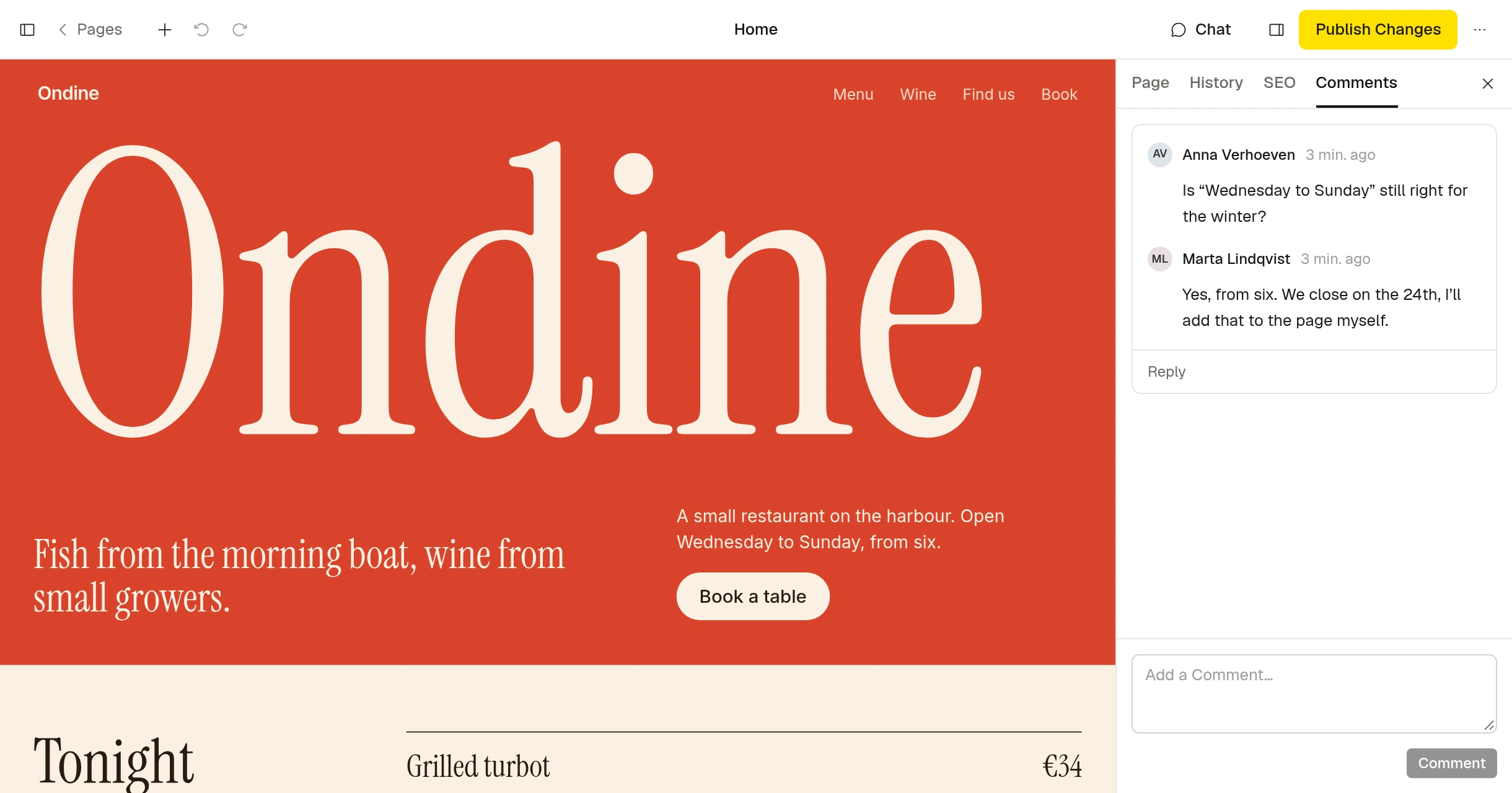
Comments where the work is.
Threads on the page, and @mentions that send an email.
Clients
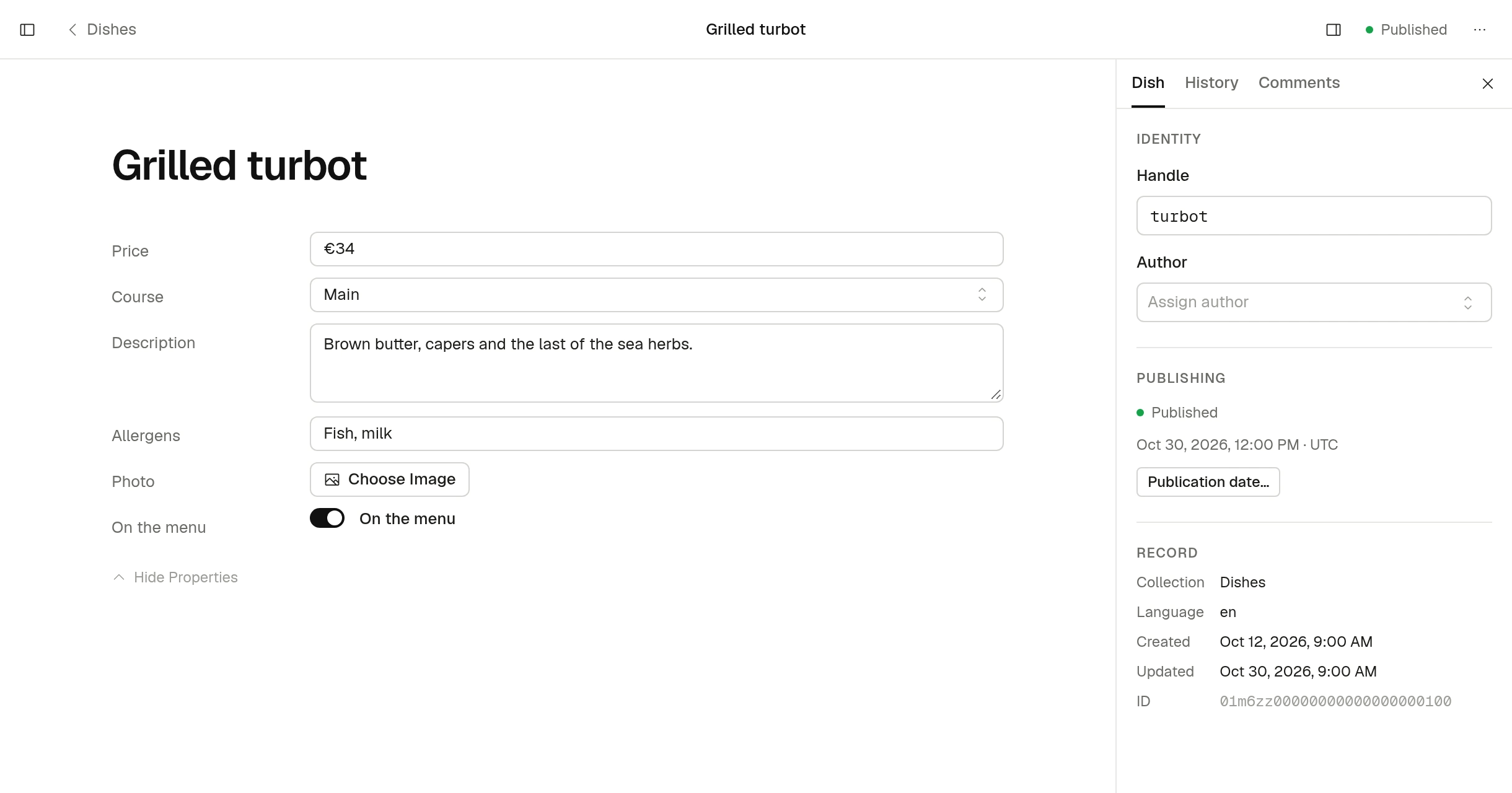
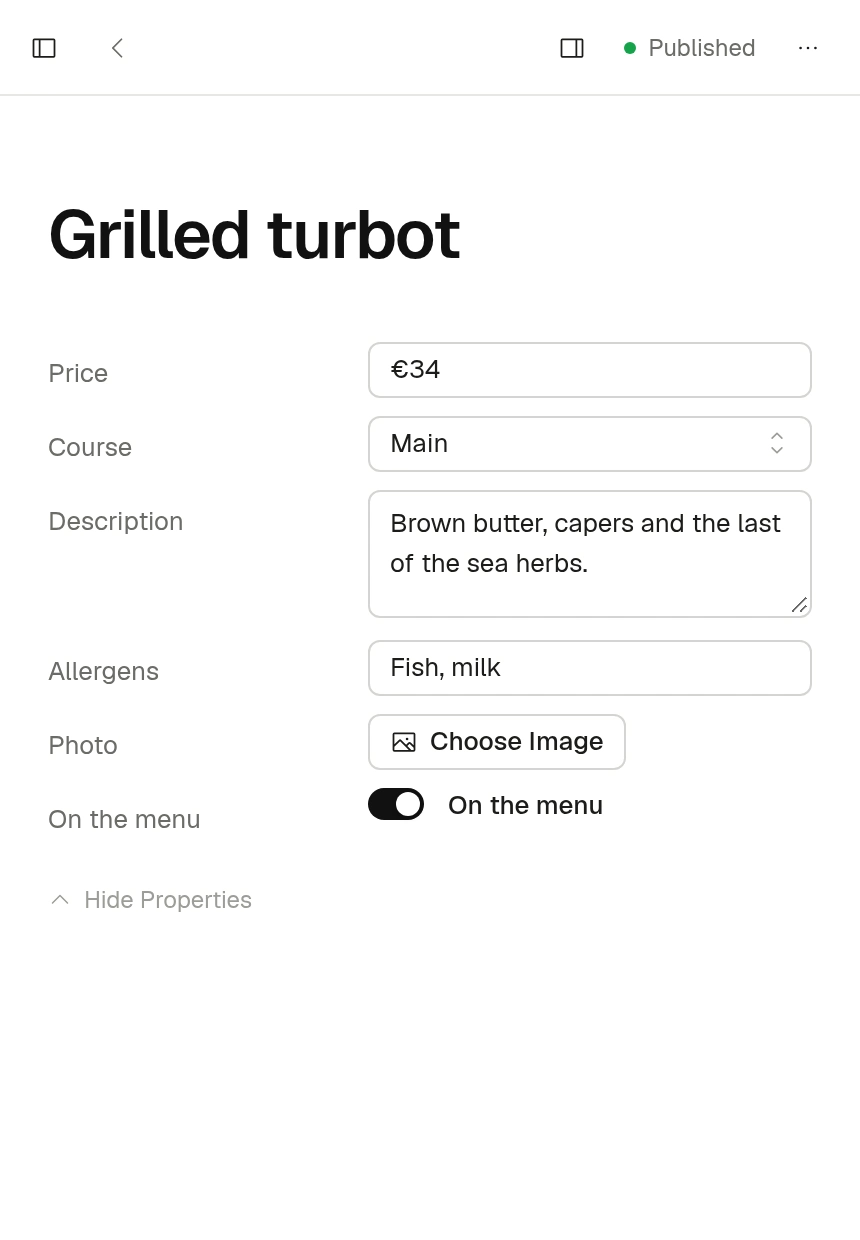
A form with their words on it.
Dishes, prices and photos. Everything else stays out of sight.
The assistant
A first draft, from your own components.
It works in draft and waits. You publish.
Add a landing page for the spring menu, using our hero and menu components.
Done. Spring menu is saved as a draft, built from your hero and menu components. Nobody sees it until you publish.
The requests that fill your week.
Most of them no longer need you.
“Can you change the opening hours?”
ClientThey do it, in a form. Your layout isn’t in reach.
“We need a page for the spring campaign.”
AssistantIt builds a draft from your components. You publish.
“Can we have that in German too?”
AssistantIt translates the page into a draft to review.
“Can the brand colour be warmer?”
DesignerOne token. Every page follows.
“Who changed the home page?”
AnyoneThe audit log says who and when, and if an agent did it.
“We want to sell online.”
CommerceCheckout, invoices and EU VAT, from the store.
Keep the budget for the work.
Free on every client site, with no seats.
On the host they already have
Any PHP host will do, so there’s no platform bill to explain.
RequirementsPlugins when a job needs them
The store has paid extras for bigger jobs, starting with Commerce.
CommercePut your next client on it.
Get started